
Fireplace ash looks inert and isn’t: embers buried in an ash bed can stay hot enough to ignite for days. Ash handling is where wood-heating households most often get casual — and most need not to. Here’s the safe routine.
The 24-Hour Rule
Never treat ash as cold until the fire has been out for at least 24 hours — 48 in doubt. Before that, everything touches ash as if it’s live: metal tools, metal container, and nothing flammable anywhere near.
The Right Container
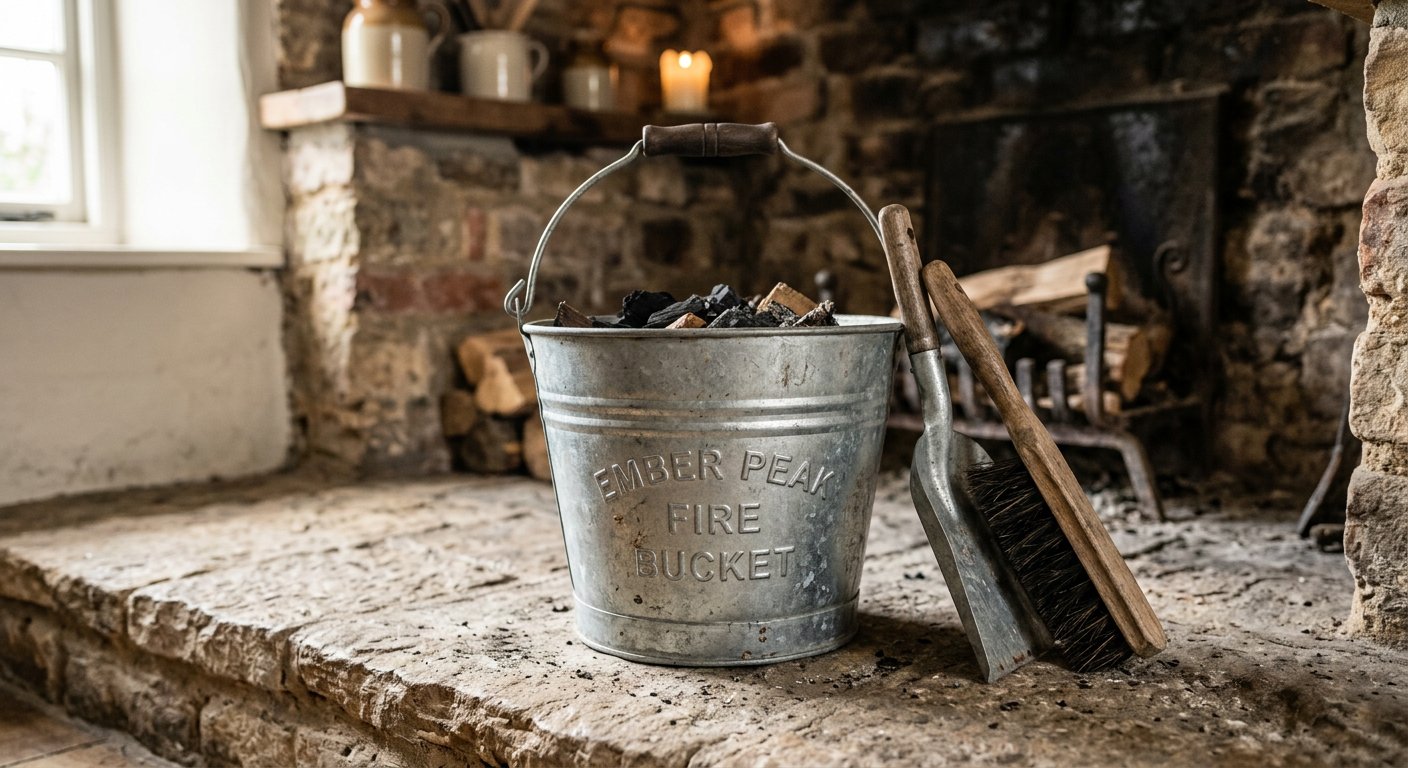
Metal, with a lid, on a non-combustible surface. Our galvanised fire bucket is built exactly for this — never a cardboard box, plastic bucket or paper bag, no matter how cold the ash looks. The classic disaster: “cold” ash in a plastic bag, on a deck, on a windy day.
The Routine
- Wait 24 hours since the last fire
- Scoop with the shovel from your bucket set into the metal bucket — slowly, so you don’t aerate hidden embers
- Brush the hearth with the hearth brush; sweepings go in the bucket too
- Store the lidded bucket outside, on concrete or dirt, away from siding
- Dispose after a further 24 hours — green waste or trash per local rules (never compost until certain it’s cold)
Why A Little Ash Is Your Friend
Leave a 2–3cm ash bed on the grate: it insulates the firebox, reflects heat back onto new wood, and protects the grate itself. Full clear-outs are for season’s end. This is also why wood stoves light best on a thin ash bed — more in the lighting guide.
Reduce ash at the source by burning dense, dry ironbark — less bark, less moisture, less residue. All hearth gear: accessories; safety fundamentals: the checklist.