
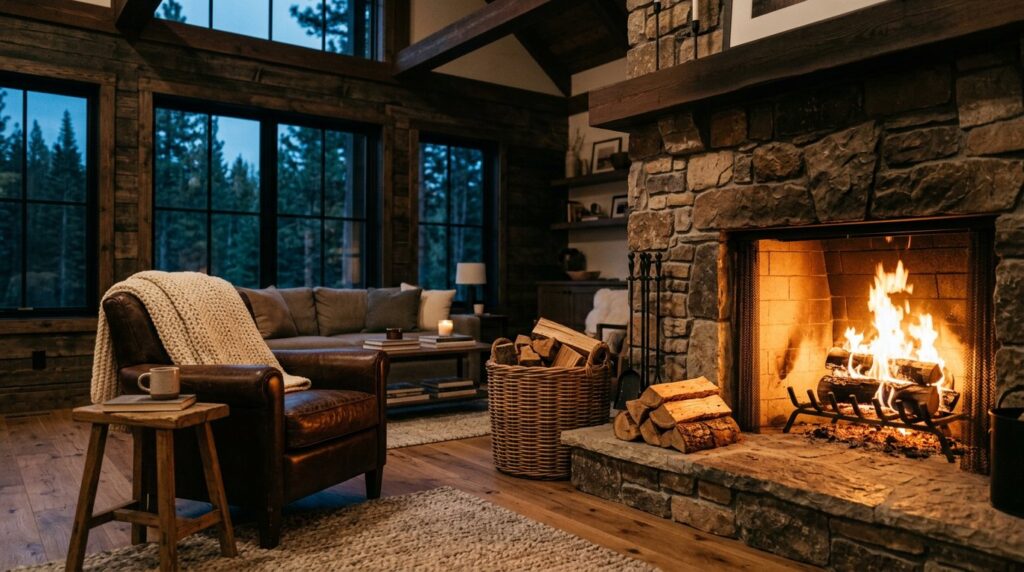
That first crisp evening when the fireplace finally calls: don’t just strike a match. Seven checks, twenty minutes, and the whole season burns better for it.
1. Check the Flue
Open the damper and look up (torch helps). Nests, debris and falling mortar all appear over summer. If it’s been twelve months since your last sweep, book one now — annual sweeping is the core of chimney safety. The full annual list: fire safety checklist.
2. Test the Draft
Hold a lit fire wool sachet or twist of paper inside the firebox: smoke should rise steadily up the flue. If it curls back, warm the flue a minute and retest — a cold-chimney pushback is normal on the first burn; a persistent one is a problem.
3. Clear and Clean
4. Smoke Alarms
Test every alarm before the season, not after the first one goes off from a smoky start. First fires are the smokiest of the year — even good ones.
5. Stage Good Fuel
The first fire forgives nothing: damp leftovers from spring spell smoke. A fresh starter pack — logs, kindling, firelighters — is the easiest way to open the season right. Bulk up on meter-tested firewood once the first fire reminds you how good winter is.
6. Light It Properly
The four-step sequence, as ever: firelighter → kindling → small wood → logs. First fires need extra patience — everything (flue, masonry, fuel) is still cold.
7. Watch the First Hour
Stay with a first fire longer than usual: watch for smoke seepage, unusual smells (last year’s dust burning off is normal; persistent chemical smells aren’t), and how the heater settles at low air. Adjust, note, enjoy.
Buying fuel late? You’re not alone — but early buying wins: the summer case. Everything you need ships from the firewood shop, with more season-start wisdom in our guides.