
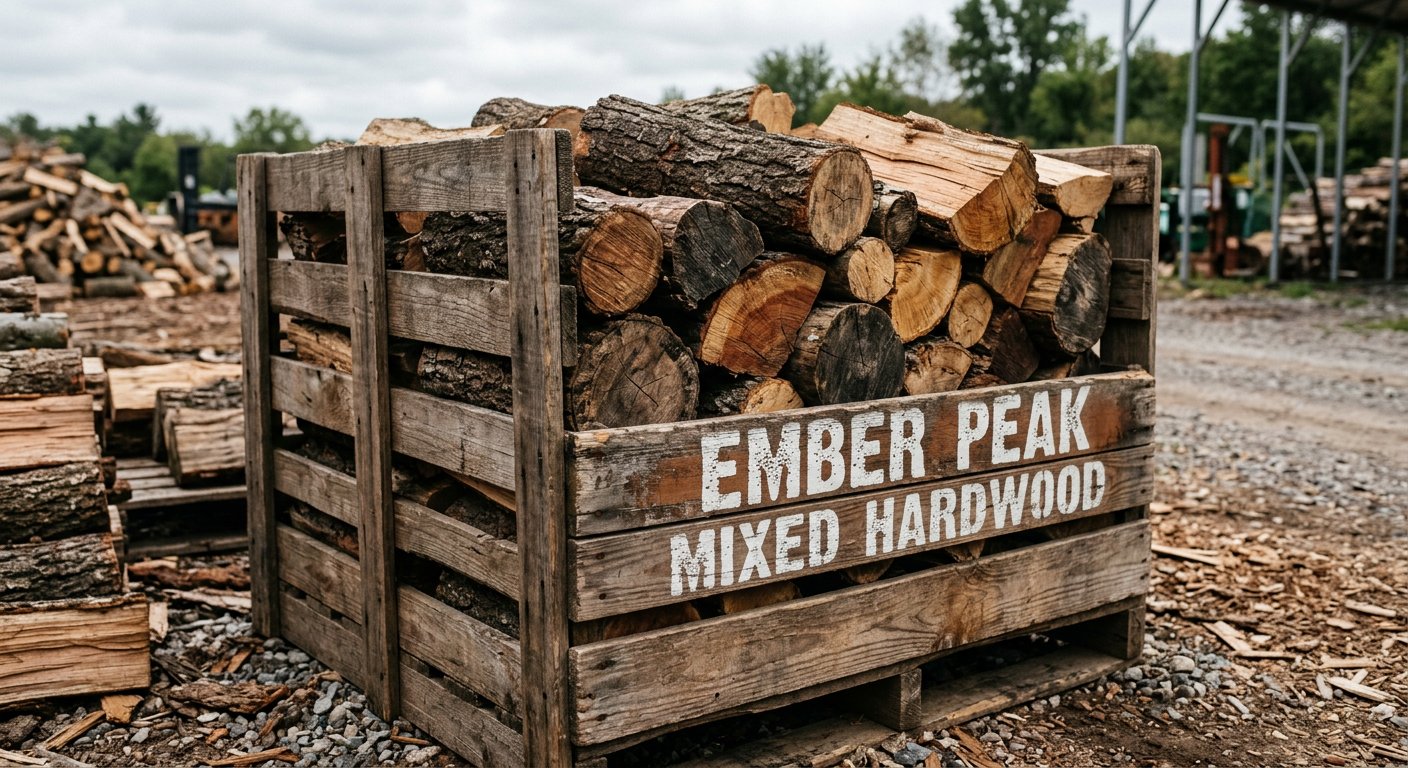
The hardwood-versus-softwood question underpins almost every firewood decision — and most of the confusion. The names don’t help: they’re botanical labels, not hardness ratings (balsa, famously soft, is technically a hardwood). But for firewood purposes, the difference is very real.
The Botanical Difference
Hardwoods come from slow-growing, broad-leaved trees — ironbark, box, red gum, oak, maple. Their slow growth packs cells densely with heavy lignin and cellulose. Softwoods come from conifers — pine, fir, spruce, cedar — which grow fast with lighter, resin-rich wood. Density is the consequence, and density is destiny for firewood.
What It Means at the Firebox
- Heat per log: a dense ironbark split holds roughly twice the fuel of a same-sized pine log — hotter output, longer burn
- Reload frequency: hardwood coals carry a fire for hours; softwood fires need feeding constantly
- Smoke: properly seasoned hardwood burns cleanest; resinous softwood smokes more even when dry
- Creosote: softwood resins condense into flue tar faster — a chimney-fire risk that builds over a season
- Lighting: the one softwood win — it catches fast, which is why it makes passable kindling
Why We Sell Hardwood Only
Heating economics: you need roughly twice the softwood volume for the same heat, at more reloading, more smoke and more chimney maintenance. Softwood’s cheap-per-pile price evaporates per unit of actual warmth. Our mixed hardwood loads are the entry point, ironbark the premium — every option dense, seasoned and moisture-tested below 20%.
Curious which hardwood to choose? See the full species comparison or browse the firewood range.