
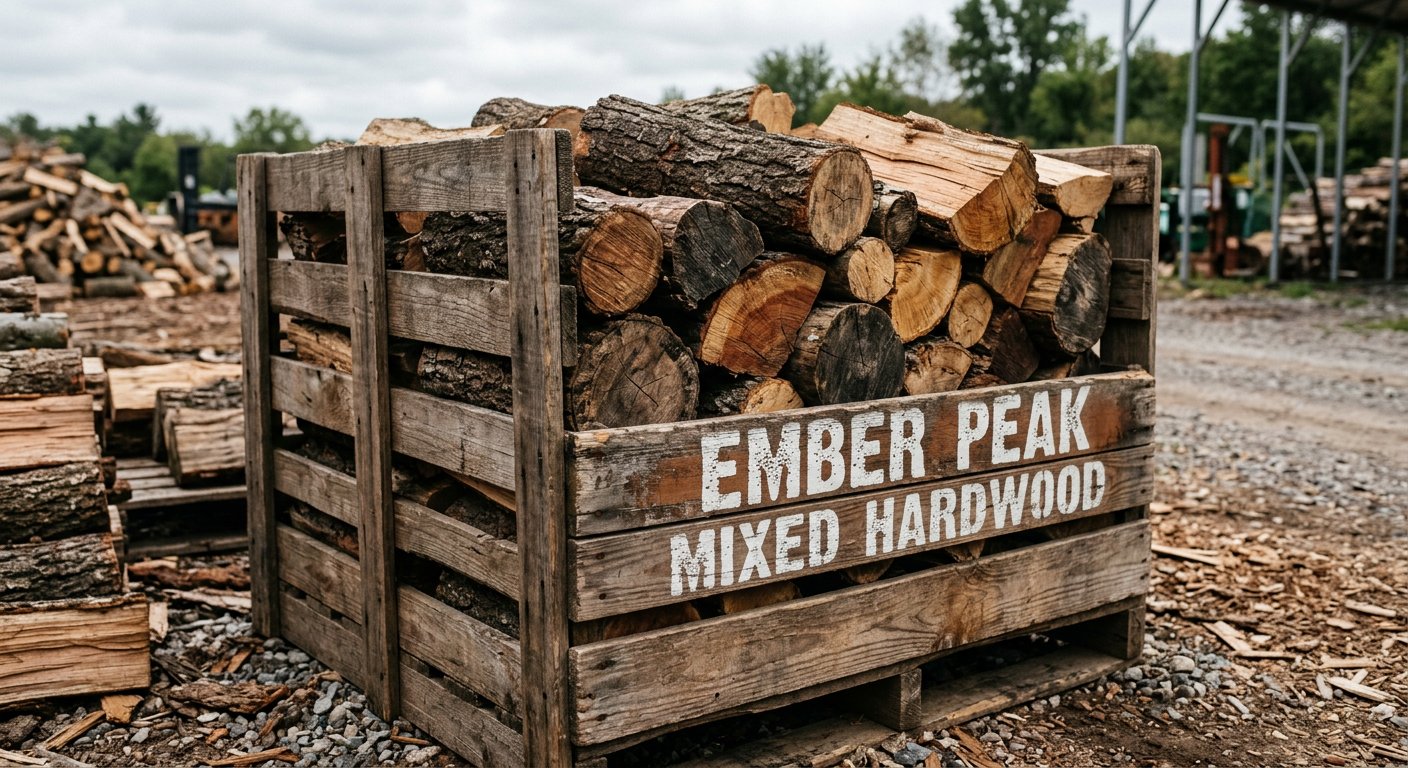
Green wood and seasoned wood look similar stacked on a trailer — which is how people end up paying premium prices for firewood that steams. Before you accept any load, run these five checks. They take five minutes and need nothing but your senses (plus, ideally, one cheap tool).
1. Check the End Grain
Seasoned wood develops checks — radial cracks running in from the cut ends, where the wood has shrunk as it dried. Green wood’s ends look smooth and freshly cut. Deep, dark-checked ends on most pieces is the first good sign.
2. Look at the Bark
Drying wood loosens its bark; seasoned logs often shed it in sheets or show separation. Bark clinging tight and freshly supple suggests recent cutting. (Ironbark’s thick plates are an exception — see our ironbark guide for its quirks.)
3. Listen to the Knock
Knock two similar logs together. Seasoned hardwood rings hollow and sharp — a “clack”. Green wood dulls into a “thud”, damp absorbing the sound. It’s crude, but it works surprisingly well once you’ve heard both.
4. Feel the Weight
Water is heavy. Lift comparable splits: seasoned wood feels startlingly light for its density; green wood feels like the wet sponge it is. This is also why we sell by verified weight — moisture hides in volume measures but shows up on scales.
5. Meter It (The Definitive Test)
A pin-type moisture meter settles any argument: split a log, push the probes into the fresh face, read. Under 20% = ready to burn. Over that, it’s still drying. The numbers behind the threshold: our moisture guide.
If a Load Fails…
From us, it won’t — every batch is meter-tested pre-dispatch and guaranteed under 20%, with replacement or refund if a correct reading says otherwise (see the policy). From anyone else: stack it open-sided, wait, and next time order from someone who tests — like this. More wood wisdom in our guides and FAQs.