It’s the most common firewood-aisle question: if I’ve got firelighters, why do I need kindling? The answer is that they do completely different jobs in the sequence that becomes a fire — and skipping either one is the top reason fires fail.
The Sequence
Fire-building is an energy ladder: firelighter → kindling → small wood → logs. Each rung must burn hot enough, long enough, to ignite the one above it. The full method: how to light a fire.
What Firelighters Do
A firelighter is the ignition guarantee — a match-proof flame source that burns 8–10 minutes regardless of breeze or damp. It exists so you never again need three attempts and a burnt thumb. One or two per fire: our wood-wool naturals or fire wool sachets.
What Kindling Does
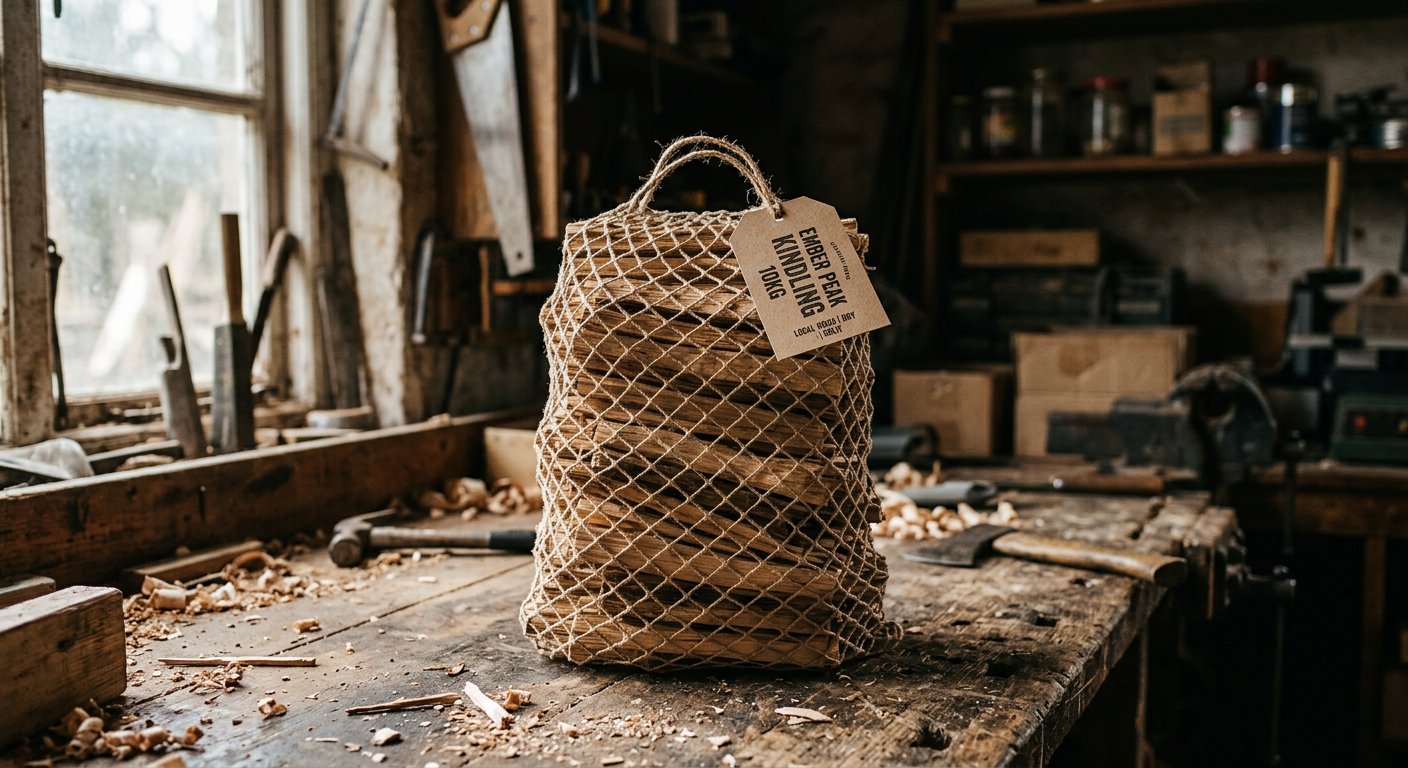
Kindling is the bridge — the first real wood in the fire. A firelighter’s ten minutes can’t raise a log to ignition; a teepee of dry kindling sticks absolutely can, building the coal bed that logs need. No kindling means the firelighter dies, the log sits there, and you start again.
So: Both. Here’s The Maths.
One fire = 1–2 firelighters + a couple of handfuls of kindling + your fuel. A winter of nightly fires ≈ one kindling bag every 2–3 weeks and a 36-pack (or the 72-pack bulk box for heavy burners). The starter pack bundles the correct ratio with logs — the calibrating first order.
Common Questions
“Can I use newspaper instead of firelighters?” You can — it’s just dramatically less reliable and leaves ink ash. “Can I use sticks from the garden?” Only if genuinely dry and from untreated wood. “Chemical firelighters?” They work but smell and taint cooking fires — naturals are the same price. More: the buyer’s guide and the FAQs.