
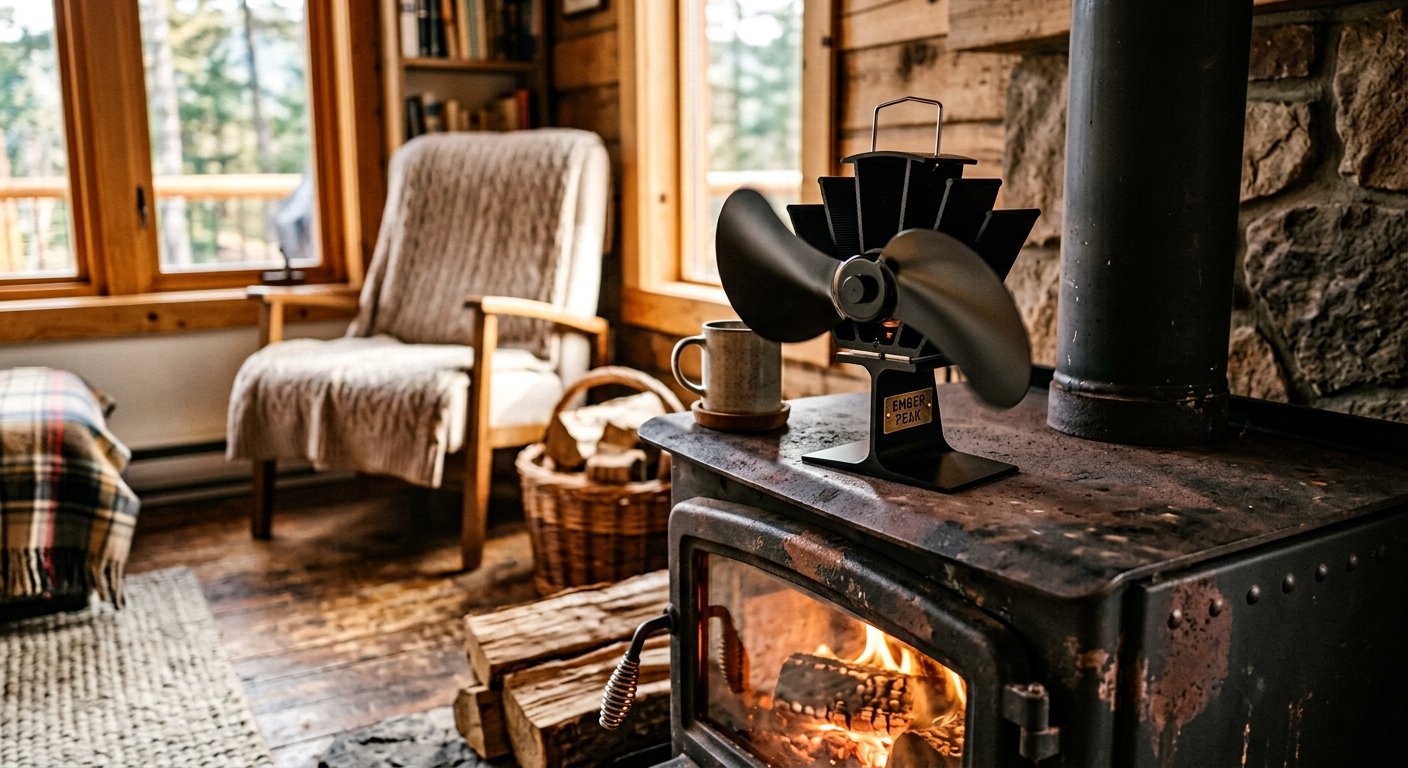
The claim sounds like magic: a fan that runs on nothing but the heat of your stove. The reality is more interesting — and more useful once you know what these fans actually do.
The Physics (Briefly)
Heat-powered fans use a thermoelectric module in the base: stove heat on one side, ambient air on the other, and the temperature difference generates just enough current to spin the blades. No cords, no batteries, no running cost — and self-regulating: it spins exactly as hard as the stove is hot.
What They Genuinely Improve
- Air circulation: stoves warm air by radiation and weak convection; a fan pushes that warm layer outward — the sofa corner stops being the only warm seat
- Room balance: big rooms and open-plan spaces even out noticeably
- Perceived warmth: moving warm air reaches people faster than still air
What They Can’t Do
A fan doesn’t create heat — it redistributes it. If your stove is undersized for the room, the fan reveals rather than fixes that. And it’s a modest push, not a gale: expect a gentle, continuous circulation, not a jet. For large spaces, the 2-in-1 dual-head version roughly doubles the airflow.
Worth It? The Verdict
For wood-stove households with a cold side of the room: emphatically yes — the classic fan is among the highest satisfaction-per-dollar accessories we sell. For tiny rooms where the stove already dominates: save the money for a kindling bag.
Placement: rear-side of the stove top, aimed at seating, and it stops itself when the fire dies. More stove optimization: overnight burns and fuel choice (why ironbark). All hearth gear: accessories.