
Ask ten people what the best firewood is and you’ll get ten answers — usually whatever grows near them. But firewood quality isn’t regional folklore: it’s physics. Two factors decide how well any log burns: how dense it is and how dry it is. Get both right and almost any hardwood burns beautifully; get either wrong and even premium timber disappoints.
Density: The Heat Engine
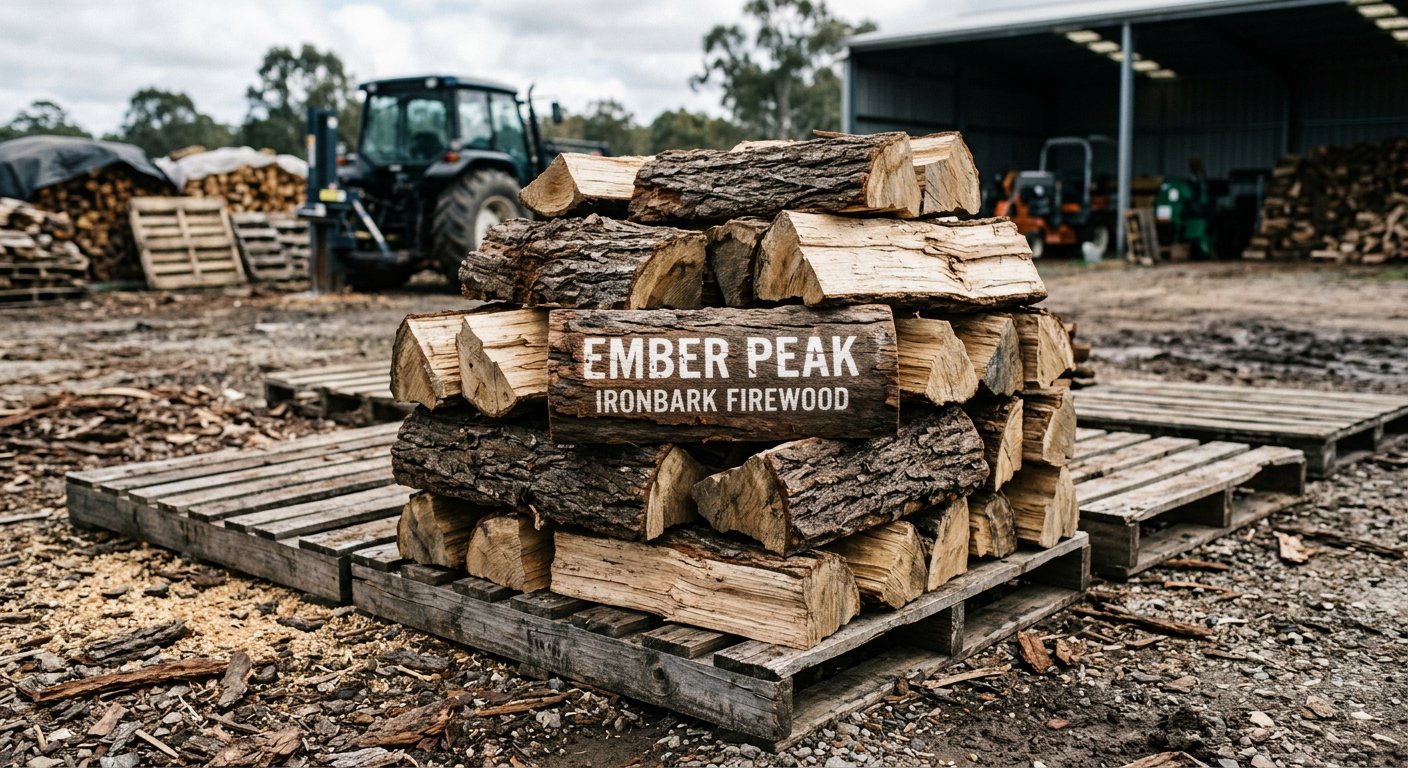
Dense wood simply contains more fuel per log. A kilogram of ironbark holds roughly the same energy as a kilogram of pine — but ironbark is twice as heavy per litre, so each log delivers around double the heat and burns correspondingly longer. That’s why the densest hardwoods — ironbark at the top of our range — are the benchmark fuels for serious heating: hotter fires, longer burns, fewer reloads, less ash.
Dryness: The Quality Multiplier
Moisture is the enemy. Wood above 20% moisture wastes a big share of its energy boiling that water off as steam — energy that should be heating your room. Wet wood also smokes heavily and creosotes your chimney. This is why we season every load for 12+ months and moisture-test below 20% before delivery — it’s the single biggest quality difference between firewood suppliers. (Our moisture guide explains the numbers.)
The Best Firewoods, Compared
- Ironbark: the premium option — maximum heat, exceptionally long burn, low smoke. Best for wood stoves and overnight heating. See ironbark firewood →
- Double split ironbark: same timber, cut twice — fast-lighting pieces for pizza ovens and compact fireboxes. See double split →
- Mixed hardwood: dense species blended for steady everyday heat at the best value. See mixed hardwood →
- Softwood (pine, fir): lights fast, burns fast, resins the chimney. Fine for kindling, poor for heating — which is why we don’t sell it as firewood.
So What Should You Buy?
For a wood stove or slow-combustion heater: ironbark, full stop. For an open fireplace used several evenings a week: mixed hardwood is the value sweet spot, with ironbark for the coldest snaps. For pizza ovens and small stoves: double split. Whatever you choose, buy it seasoned and below 20% — or you’re buying steam, not heat.
Not sure how much to order? Our winter sizing guide walks you through it, and the FAQs cover everything else. Ready to order? The full range is in the firewood shop.