
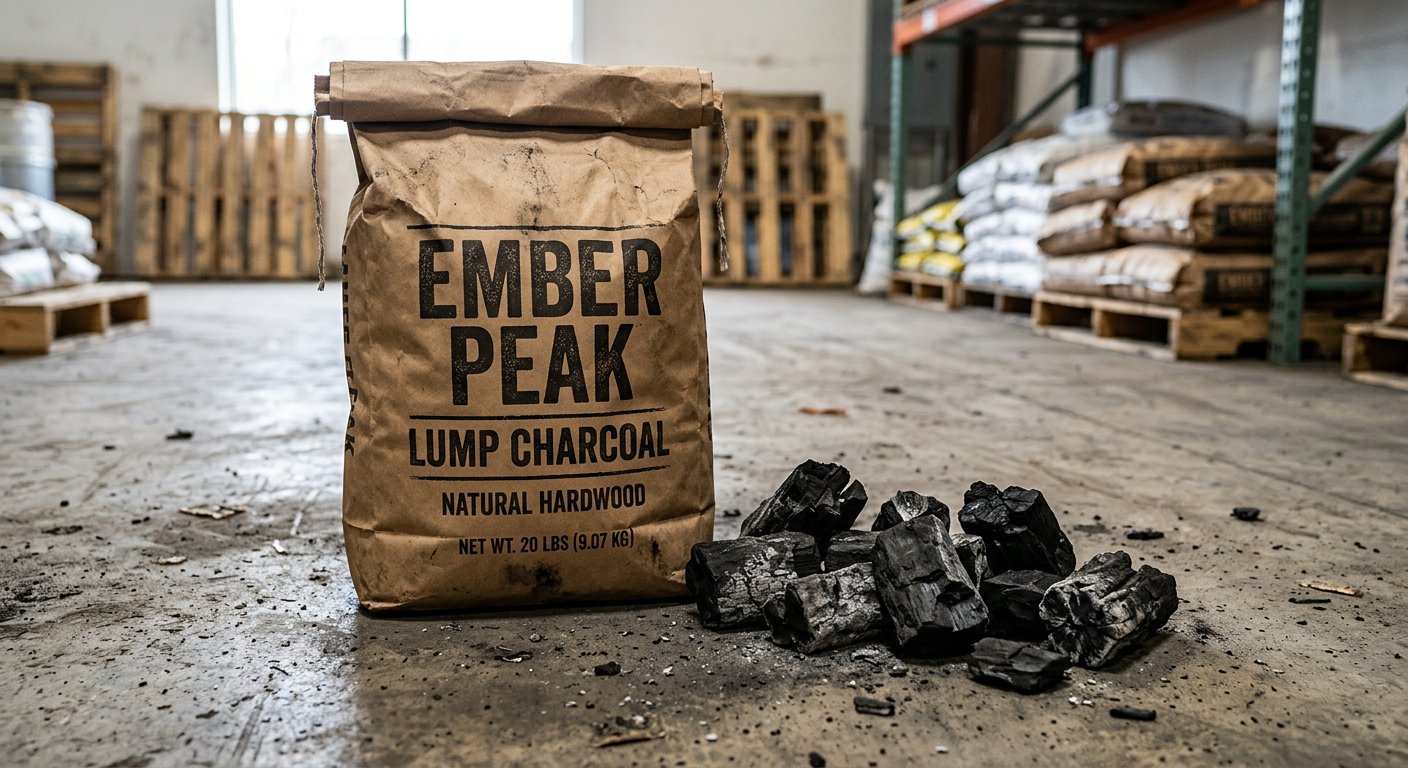
Charcoal versus wood is barbecue’s oldest debate — and the honest answer is that they’re the same thing at different stages. Charcoal is wood, cooked down to nearly pure carbon; burning it is just the second half of a fire that started in a kiln. Understanding that resolves most of the debate.
What Charcoal Does Best
Predictability. Lump charcoal lights fast, burns hot and responds quickly to vents — the searing and high-heat choice. Briquettes burn lower and remarkably evenly for hours — the low-and-slow backbone. Both deliver steady heat with minimal tending, which is why most BBQ runs on a charcoal base.
What Wood Does Best
Flavour and flame. Real wood — like our seasoned fire pit wood or double split hardwood — contributes the volatile compounds that make food taste wood-fired: visible flame for rotisserie and pizza, aromatic coals, and that unmistakable character. Wood also burns faster and hotter in flame form, demanding a bit more management.
The Hybrid (What Pitmasters Actually Do)
Charcoal for the heat, wood for the flavour: a stable charcoal bed with smoking chips or a split or two scattered over — steady temperature plus genuine wood smoke. It’s how competition cooks and pizzerias run, and it’s the easiest path to serious results. The pairing logic: best wood for smoking meat.
Quick Decision Guide
- Weeknight grilling, steaks, burgers: lump charcoal
- Overnight brisket, pulled pork: briquettes + smoking wood
- Pizza oven, rotisserie, fire cooking: seasoned double split wood
- Camp cooking: charcoal in a portable pit, or local wood if you can verify it’s dry
Whatever you burn, one rule is absolute: it must be dry and untreated. Our full fuel wall: BBQ & smoking wood — with technique in the guides and the FAQs.