
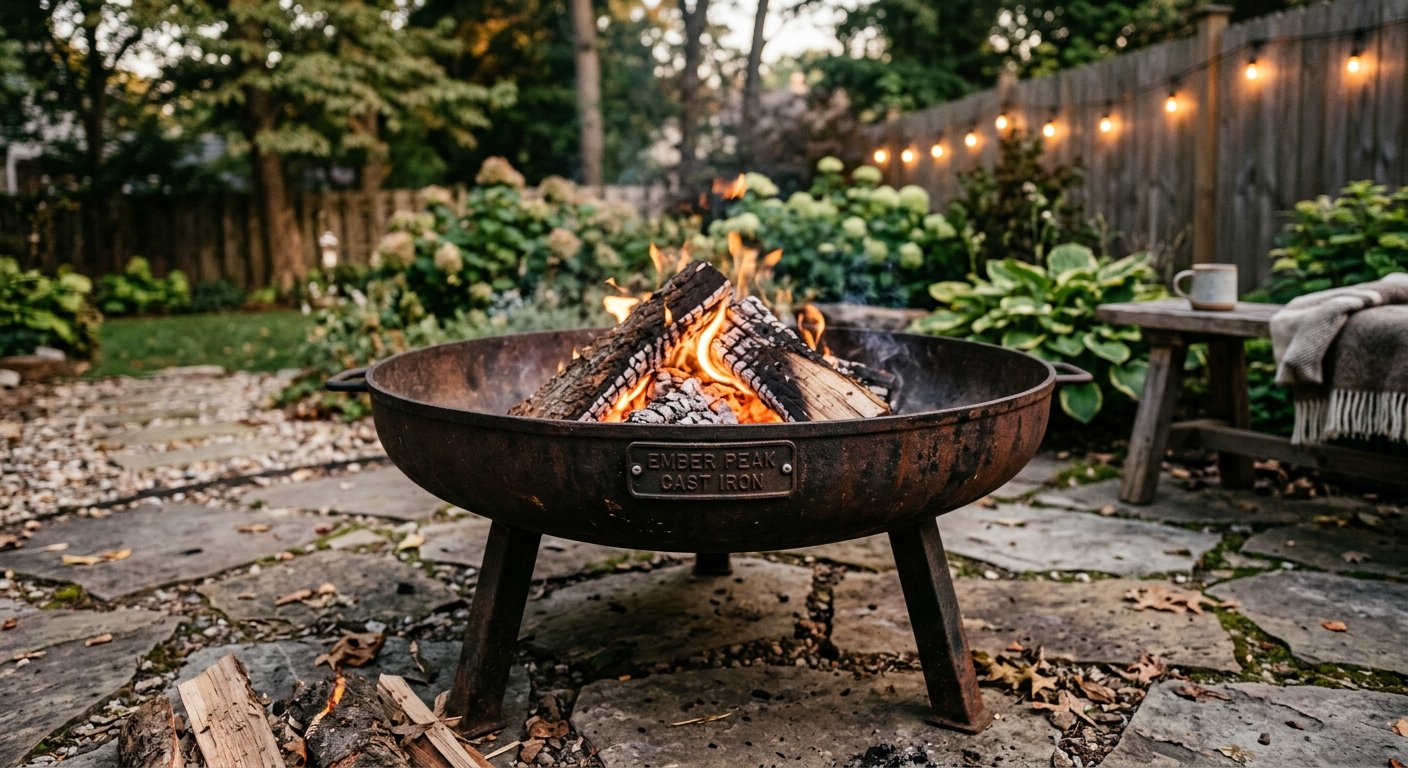
A fire pit fire lives outdoors, where wind, open sightlines and a ring of guests change the rules. Build it right and it’s the warm heart of the evening; build it wrong and you’re babysitting smoke. Here’s the full method.
1. Start With the Right Fuel
Outdoor fires forgive less than indoor ones — breeze cools flames, so wet wood that would barely smoke indoors will smoke obviously in a pit. Use seasoned wood under 20% moisture: our fire pit wood is cut short for pit loads, or break out double split bags. For truly low-smoke evenings, pit charcoal is the neighbour-friendly option — and a low-smoke pit transforms the experience entirely.
2. Build for Air
The teepee is the fire pit classic: kindling teepee over a fire wool sachet, then small splits leaned around it, teepee-style. Air gaps everywhere, wide base, narrow top. Or go upside-down: logs base, kindling top, one match, zero tending — ideal once the evening is underway and you’d rather talk than poke.
3. Feed It Like a Host
Add a log or two when the flame height drops — before the fire shrinks to coals. Keep fuel toward the centre, never heaped over the sides. And keep the pile modest: a fire pit fire that fits inside the bowl is warm and beautiful; one built above the rim is a hazard.
4. The Safety Ring
- Three metres of clearance above and around — no overhanging branches, umbrellas or awnings
- On decks: a fire pit floor protector, non-negotiable
- A water source or extinguisher within reach
- Never leave it unattended; drown it cold before you leave it overnight
The full checklist lives in our fire safety guide.
5. Wind Management
Rotate your seating (or the pit, if it’s a light mover) so smoke drifts away from the circle — and remember from the smoke guide: dry wood plus airflow equals a pleasant evening. Choose your pit in the fire pit range, and find more outdoor know-how in our guides.