
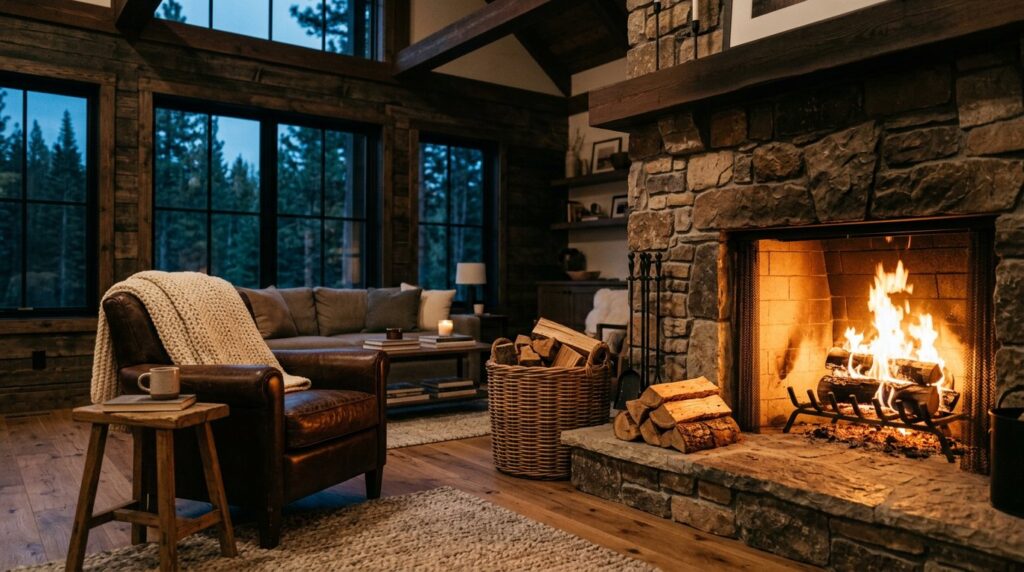
A smoky fire isn’t just annoying — it’s wasted fuel. Smoke is unburned wood particle, which means every plume drifting over the fence is heat you paid for going up unlit. Here are the five real causes, and the fix for each.
1. Wet Wood (90% of All Smoky Fires)
Wood above 20% moisture smoulders instead of blazing — the fire never gets hot enough to burn its own gases, so they escape as smoke. The fix is the big one: burn only below-20% seasoned wood. Every Ember Peak load is meter-tested before dispatch; if you’re elsewhere, test before you buy.
2. Not Enough Airflow
Fire needs three things: fuel, heat and oxygen. Logs packed flat and tight starve the middle of the fire — the gases that should flame off inside the firebox smoulder out as smoke instead. Fix: build fires with air gaps. Stack kindling teepee-style or log-cabin style, and place logs with splits facing down so flame can lick up beneath them. Our fire-lighting guide shows the structure that works.
3. A Cold Flue
In fireplaces, a chimney full of cold air pushes smoke back down into the room until the draft establishes. Fix: warm the flue first — light a twisted sheet of newspaper (or a fire wool sachet) high in the firebox for a minute before building the fire proper.
4. The Wrong Fuel
Resinous softwood, treated timber, painted offcuts — all smoke factories, and treated wood is outright dangerous. Fix: clean hardwood only; see hardwood vs softwood for why.
5. Smothering a Young Fire
The most common beginner error: adding big logs before the coal bed exists. The fire drowns, and the smoke show begins. Fix: build through the sequence — firelighter, then kindling, then small splits (double split is ideal), then full logs only once coals form.
The Low-Smoke Shortcut
Outdoors, a low-smoke fire pit reburns smoke before it escapes — double-wall combustion that cuts most visible smoke even with ordinary wood. Indoors, the answer is always the same: dry wood, real airflow, coals before logs. More in our guides and the FAQs.