
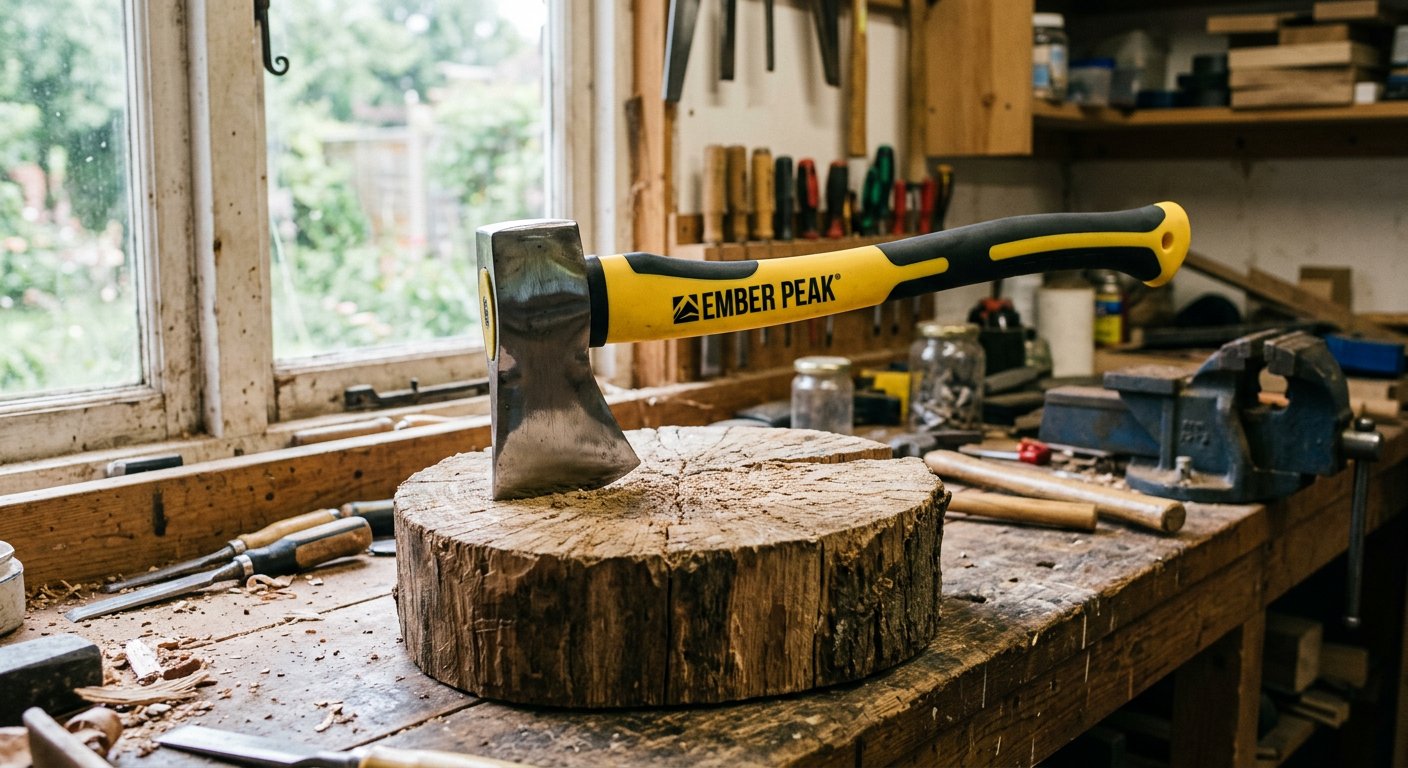
Splitting firewood is deeply satisfying work — the thunk of a clean split, a growing pile of future warmth. It’s also the moment careless technique catches up with people. Here’s the complete safe method, from setup to swing.
The Setup (Where Safety Starts)
- Split on a block, not the ground: a proper hardwood splitting block at knee height protects your axe, your back, and your patios — never split on stone, soil or concrete
- Clear the arena: a two-metre circle with no kids, pets, or trip hazards
- Eye protection and boots. Non-negotiable, every time
- One splitter, one zone: bystanders stand well behind, never to the side
The Swing
Let physics do the work: choke up on the handle, raise the axe smoothly, and release your top hand as you swing down — the axe accelerates while your arms stay relaxed. Aim for the checks (cracks) already in the round, and let the follow-through carry through the target, not into the dirt. If a round refuses after three good strikes, set it aside for the Super Blocksplitter — stubborn rounds are a tool problem, not an ego problem.
Choosing Your Tool
- Hatchet (680g) — kindling sticks, one-handed work
- Fibreglass axe (2kg) — the all-round splitter, shock-absorbing handle
- Timber blocksplitter (2.5kg) — big dense rounds, traditional feel
- Sawyer station — waist-height controlled splitting, no overhead swings
After the Split
Stack immediately — open-sided, off the ground — and the drying clock starts today. The full seasoning method: how to season your own firewood. And remember: split wood you’ve bought pre-split (double split loads) exists precisely for the weeks when splitting isn’t on the menu. More gear: wood cutting tools.