
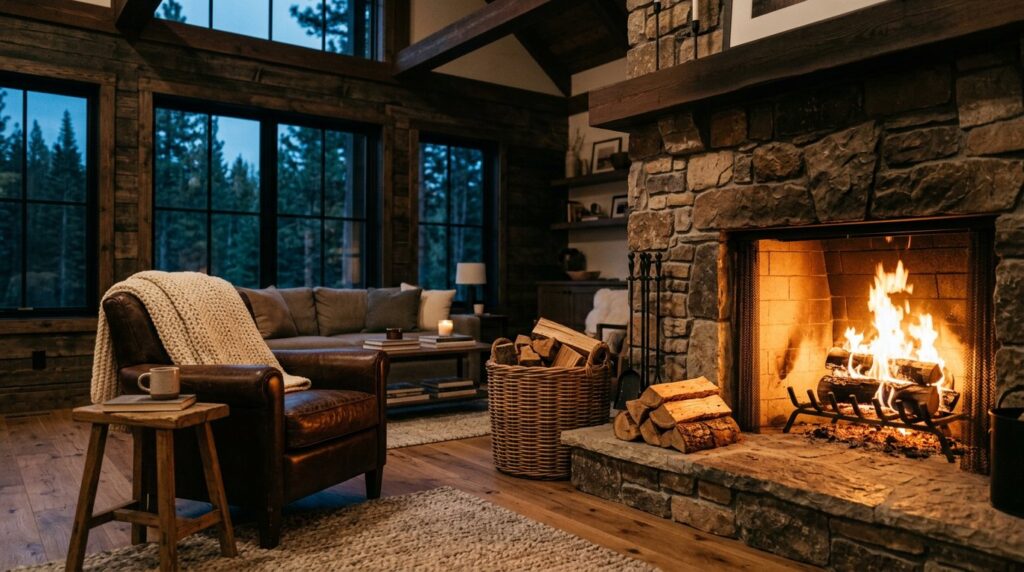
Wood fires are safe the way driving is safe: overwhelmingly, when the basics are respected. This is the checklist we’d hand every new customer before their first delivery — ten minutes twice a year, and thirty seconds before every fire.
Before the Season (Once a Year)
- Chimney inspected and swept: annual for regular burners — creosote is the fuel chimney fires are made of, and dry wood is how you keep it slow (see why moisture matters)
- Smoke alarms tested — every floor, every bedroom hallway; batteries dated
- Fire extinguisher present and in date — and everyone knows where
- Hearth and clearances checked: metre of clearance around the firebox; nothing flammable stored closer
- Stove door seals and glass checked — leaking seals change burn behaviour overnight
Before Every Fire (Thirty Seconds)
- Fireplace screen or door in place — open fires throw sparks
- Nothing drying on or near the hearth (the classic Christmas-cardigan fire)
- Wood is dry, never treated or painted — burning treated timber is toxic
- Indoor firewood stock limited to a day or two (storage wisdom: full guide)
Fire Pit Rules (Outdoor)
- Three metres of overhead and lateral clearance
- Deck protection: a fire pit floor protector under any pit on timber
- Water source within reach before lighting
- Check local fire restrictions and wind before every burn
- Extinguish completely — drown, stir, drown again until cold to touch
Choosing pit placement? Our fire pit fire guide covers the build-and-tend side.
The Two Habits That Matter Most
Never leave a fire unattended — indoors or out. And burn dry wood: it’s not just efficiency, it’s the single biggest safety upgrade you can make, cutting creosote and sparks at the source. Our below-20% guarantee: seasoned firewood. More in the guides and FAQs.