
Skip past the kindling and firelighters when ordering firewood and you’ll spend the winter fighting your fuel. These are the smallest items on the invoice and the difference between one-match evenings and twenty-minute struggles. Here’s what matters.
Kindling: What “Good” Looks Like
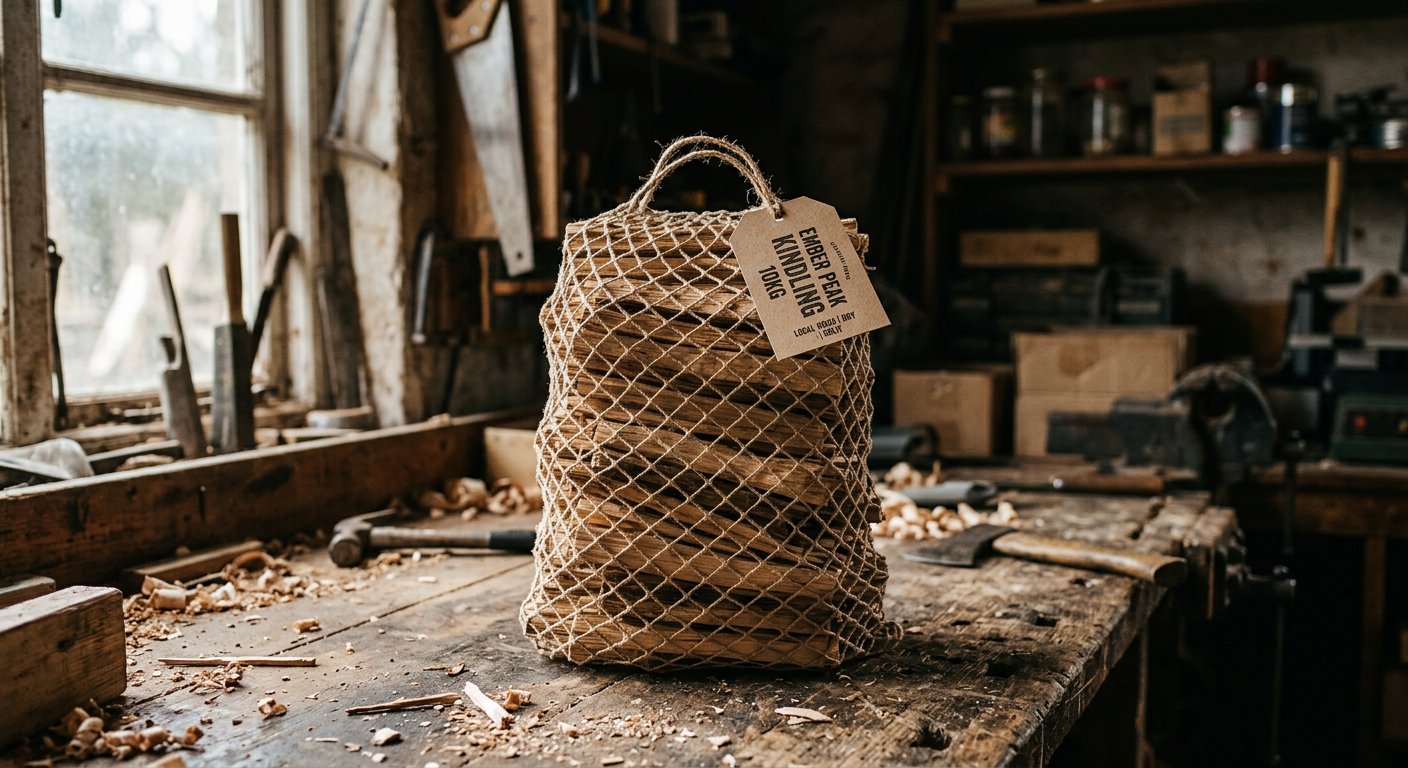
Kindling should be split, dry and quick-catching — thumb-thick sticks of hardwood, bark-free where possible, snapped crisp rather than bendy. Our 10kg net bags are exactly that: split hardwood sticks, stored dry, packed in breathable nets so they stay that way by the hearth. Avoid mouldy, sappy or painted offcuts — they smoke and taint.
Firelighters: Natural vs Chemical
Chemical blocks (the white petrol-smelling kind) work but smell, taint cooking fires and leave residue. Natural firelighters — wood wool and wax — light with one match, burn 8–10 minutes and are odourless: our wood-wool firelighters and fire wool sachets are the cooking-safe choice. Gel (fire gel) suits big kindling stacks; long fire matches keep fingers clear.
How Much To Keep On Hand
A fire a night through winter wants roughly a kindling bag every 2–3 weeks and one or two firelighters per fire — a starter pack is calibrated as the complete ratio (logs, kindling, firelighters) and makes the ideal first order from any supplier. Heavy burner? The 72-pack bulk box ends firelighter anxiety for a season.
Using Them Properly
Sequence beats quantity: firelighter under a small kindling teepee, small splits (double split bags work beautifully) once it’s blazing, logs only when coals glow. The full method: how to light a fire. And if fires still fail, the diagnosis is usually fuel moisture — test it. Everything ships from the fire lighting range, with quick answers in the FAQs.