
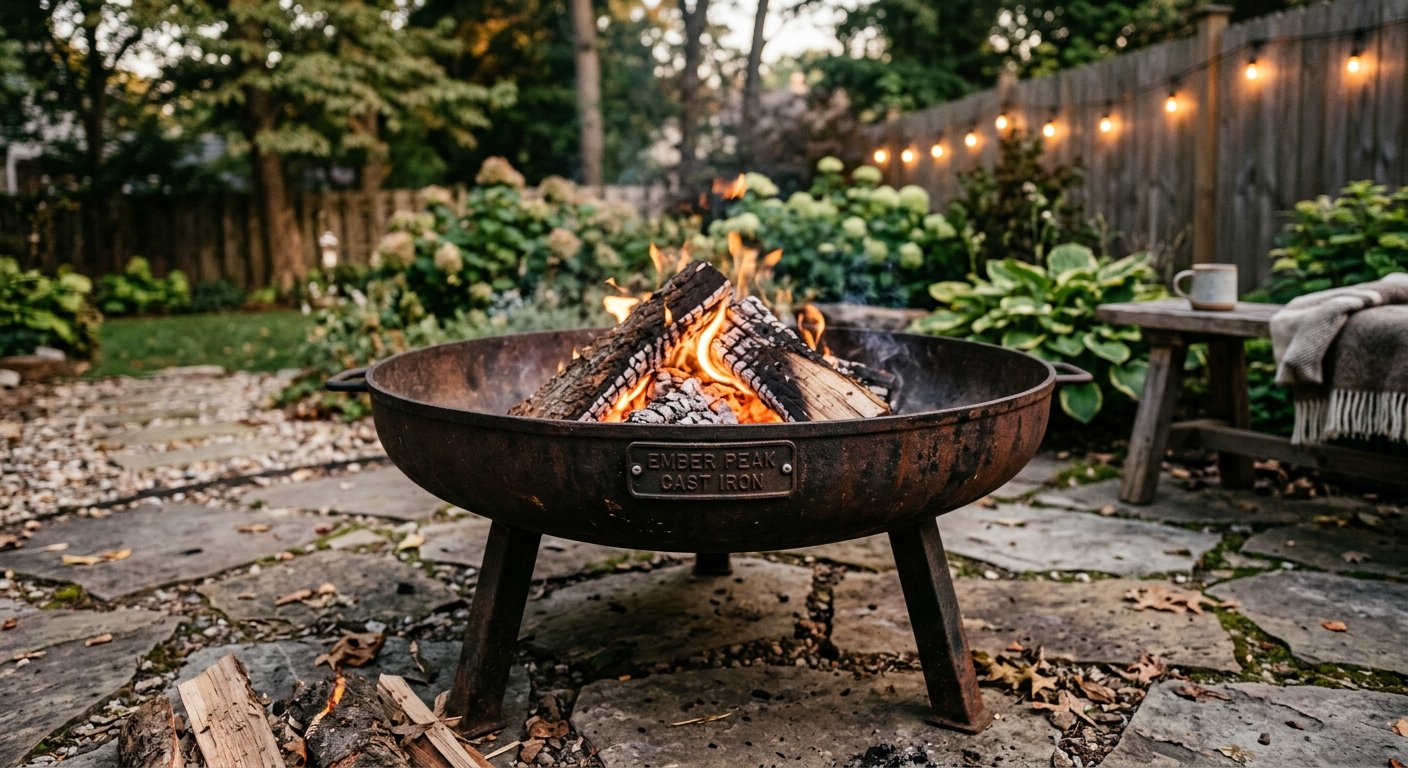
A fire pit is a ten-year purchase, which makes it worth ten minutes of thinking. Answer four questions — material, size, style and surface — and the right pit announces itself.
Question 1: Material
Cast iron holds and radiates heat longest — the warmest seat circles, the most traditional look — at the cost of weight (see the 120cm). Steel heats fast, weighs less and costs less: bowls, squares and portables all live here. Corten/weathering steel brings the rustic rust patina that improves for decades (the Leaf Dome is the sculpture end of the spectrum). The deep comparison: cast iron vs steel.
Question 2: Size
- 2–3 chairs, balcony/courtyard: 38–45cm — 38cm basket or 45cm pedestal bowl
- 4–6 chairs, average patio: 50–70cm — Aura 70, Windermere 50
- The whole street: 100cm+ — 120cm cast iron or Pittsburgh XL
Question 3: Style & Special Features
Pedestal bowls lift flame to eye level; shallow bowls maximise radiant heat and flame show (Empire); squares bring architectural order (Granito Square). Cooking? The Teppanyaki wraps a griddle around the fire; the Wanderer converts grill-to-campfire. Smoke-sensitive setting? The Dante low-smoke pit reburns its own smoke. Traveling? The folding pit and camper.
Question 4: Surface & Safety
On timber decks, a heat-resistant protector mat is non-negotiable; on grass or stone, three metres of overhead clearance is the rule. The full list: fire safety checklist.
Then Fuel It Right
Any pit burns best on below-20% wood — fire pit wood is cut short for bowls, and our fire-building guide covers structure for pits specifically. Browse everything at the fire pit range, and get quick answers in the FAQs.