
Creosote is the tax wet wood and cool fires pay — tar condensed on flue walls, compounding quietly until it’s a chimney fire waiting for a spark. Removal is a solved problem; here’s what actually works.
Know Your Enemy
Stage one is flaky soot (brushes off easily). Stage two is crunchy, tar-glazed deposit (brushing hard, chemicals help). Stage three is shiny, fuel-like glaze — professional territory only. The formation mechanics: our chimney-fire prevention guide.
What Works
- Annual professional sweep: the backbone of flue safety — the standard every burner should keep
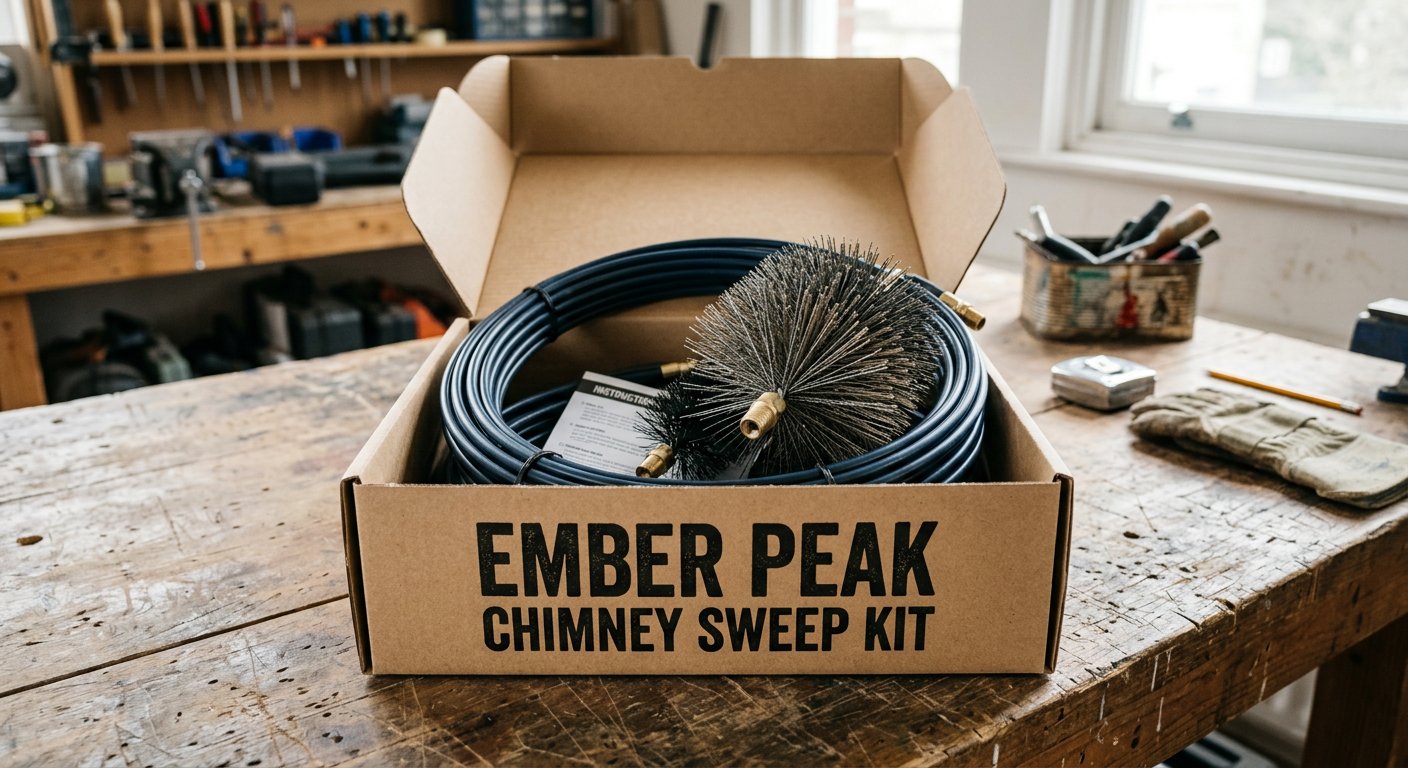
- DIY brush kits between visits: the Chimney Sweep in a Box handles stage-one maintenance on straight, accessible flues — sealed firebox, sheeted area, rods and brush from below
- Moderate chemical cleaners: soot-modifier powders used as directed can loosen early-stage deposits ahead of brushing
What Doesn’t (Alone)
“Chimney cleaning logs” that claim to dissolve creosote while you sleep can soften surface soot, but they don’t replace sweeping and can’t touch glazed deposits. Treat them as a supplement, never a plan. Likewise: a hotter-than-normal fire to “burn out” creosote is precisely how chimney fires start. Don’t.
The Real Solution: Make Less Of It
- Dry fuel: below-20% wood (the guide) — ours is meter-tested on every load
- Hot, complete burns: brisk burns after long slow ones; see the smoke guide — smoky fire and creosote are the same failure
- Annual inspection: camera or mirror look before every season — the checklist
Maintenance gear: cleaning products. The full safety picture: the fire safety checklist.