
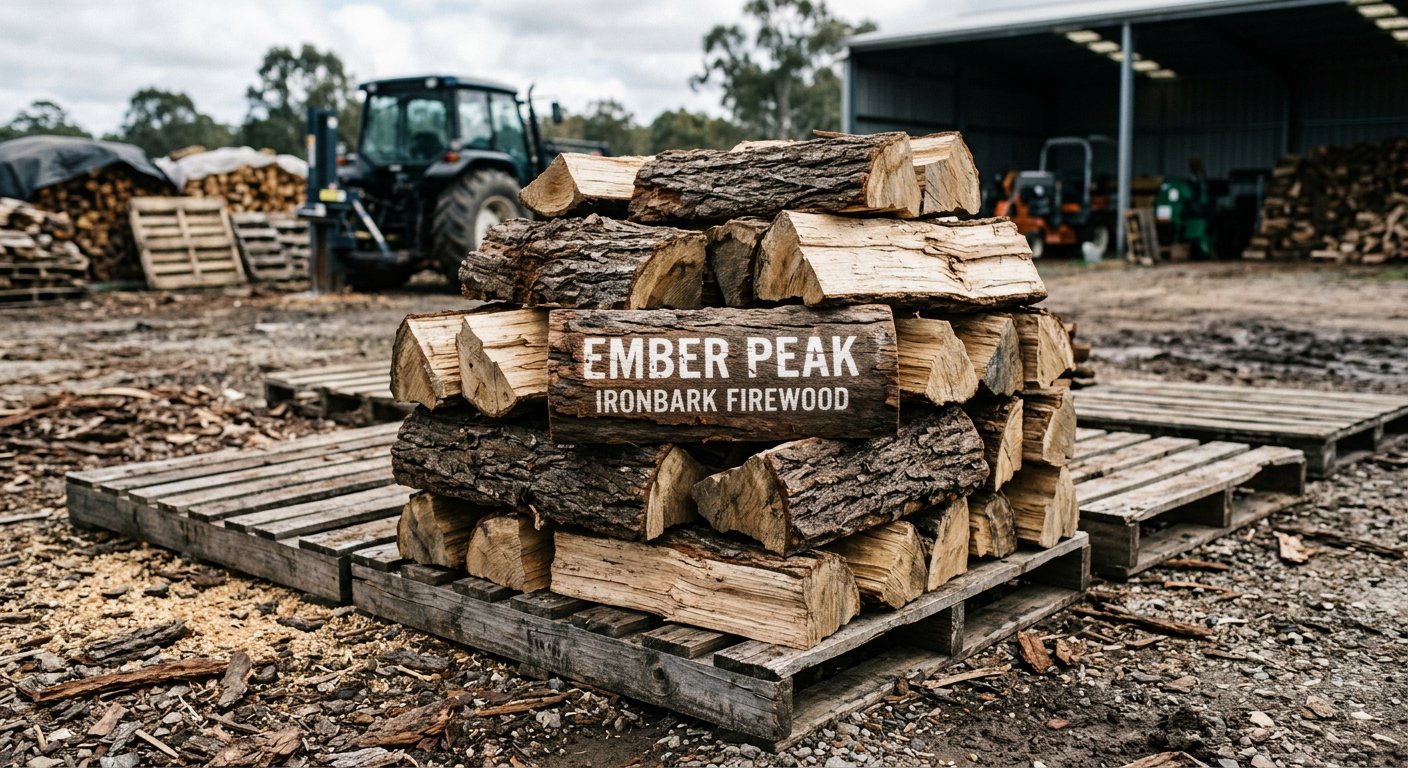
Among people who burn wood seriously, ironbark has a reputation that borders on mythology. The reputation is earned. Ironbark is one of the densest commercial firewoods on earth, and in a firebox, density translates directly into heat, endurance and value.
What Is Ironbark?
Ironbarks are a group of eucalypt species whose bark hardens into dark, deeply furrowed plates — timber so hard early settlers struggled to nail it. That growth density is the whole story: slow-grown, tight-grained wood that packs more fuel into every log than almost any alternative.
How It Performs
- Heat output: among the highest of any firewood — a firebox of ironbark runs noticeably hotter than the same volume of lighter hardwood
- Burn length: full splits smoulder into dense coals that hold heat for hours — the wood that makes overnight burns possible
- Smoke: very low when seasoned — cleaner fires, happier neighbours
- Ash: minimal; a season of ironbark leaves less ash than a month of softer woods
- Coals: ironbark’s coal bed is legendary among cooks — steady, long, even heat for wood-fired cooking
When It’s Worth It
Ironbark commands a premium per tonne — and repays it whenever heat matters most: primary heating through real winters, overnight stove burns, and wood-fired cooking where coal quality defines results. For occasional evening fires, our mixed hardwood is the better-value choice. For everything serious, ironbark — delivered by the half, full or multi-tonne load.
Running a smaller firebox or pizza oven? Double split ironbark gives you the same density in faster-catching pieces. And like every Ember Peak load, it’s seasoned 12+ months and meter-tested below 20% before it ships.