
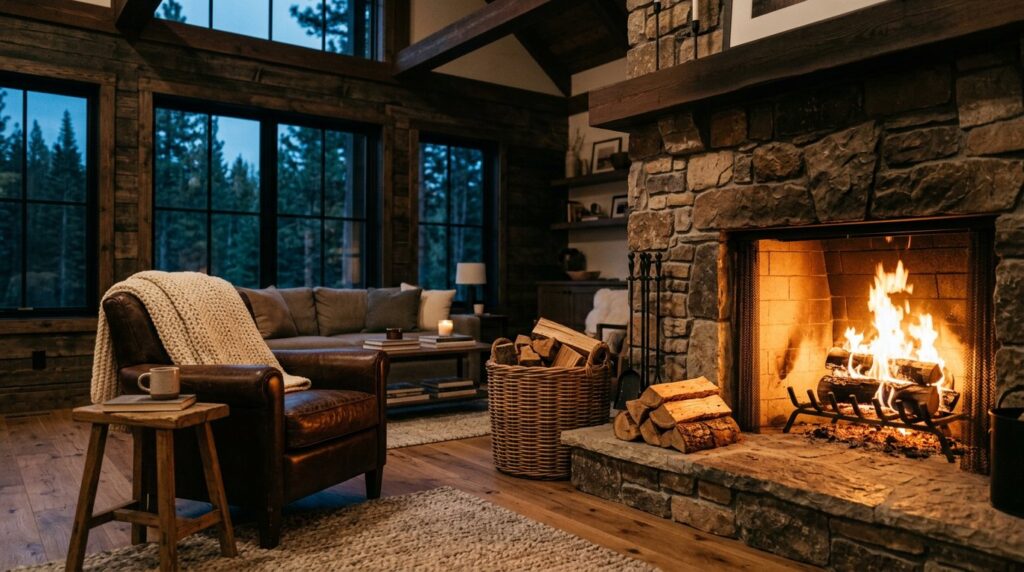
There’s a particular satisfaction in shuffling out to a cold kitchen at 6am and finding the stove still glowing — and a particular frustration in finding it dead. Overnight burns aren’t luck; they’re a method, and it has three parts: the right wood, the right coal bed, the right air.
1. The Right Wood
Overnight burns live and die on density and moisture. Light, wet wood is spent by midnight no matter how you stack it. Dense, well-seasoned hardwood — ironbark above all — packs enough fuel to smoulder for 8+ hours. And it must be dry: wood above 20% moisture stalls and dies overnight. (Background: our moisture guide.)
2. Build the Coal Bed First
Coals, not flames, carry a fire through the night. Before loading up, burn normally until you have a deep, even coal bed across the firebox — an hour of brisk burning does it. Rake the coals forward toward the air inlet, so the fresh load ignites from the front and burns back slowly.
3. Load and Set
- Load the firebox fully — big splits packed close, bark-side down where you can (bark slows the burn like a wrapper)
- Close the door, set air to low — the lowest setting that still shows flame when you check after ten minutes
- Leave it alone. Overnight poking is what kills overnight fires
4. Morning: Recover, Don’t Relight
A successful overnight burn leaves a bed of coals under grey ash. Open the air fully, rake the coals open, add small splits first — double split catches fastest — and the fire roars back without a match. Ten minutes of technique beats a cold relight every time.
Common Killers
Wet wood (always), an overloaded draft that rockets early then dies, ash beds so deep they smother airflow — clean ash out weekly in heating season — and cheap stove glass seals that leak air overnight. Fix those four and overnight burns become routine. See also our ironbark guide for the fuel side, and the FAQs for everything else.