
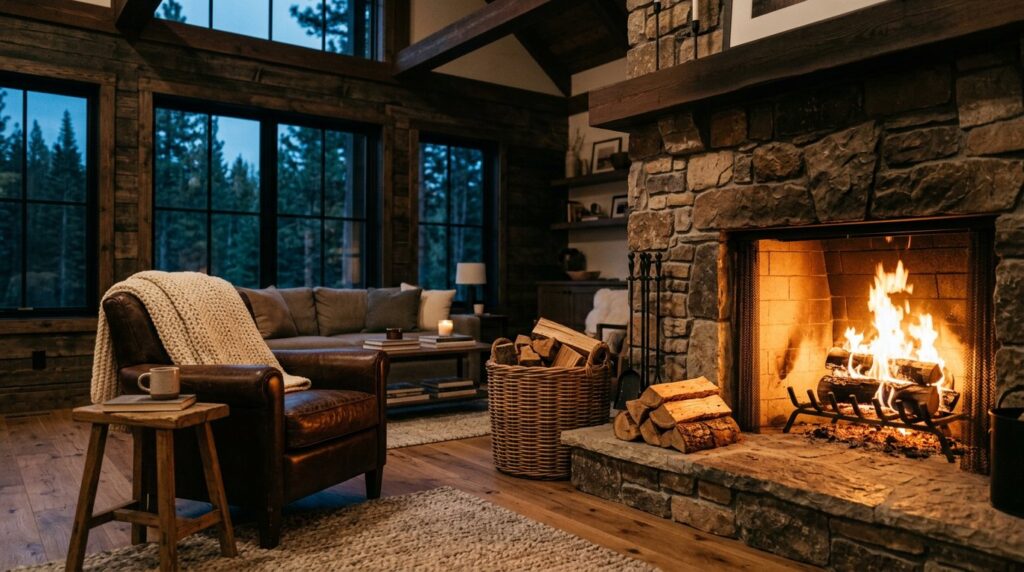
Few home upgrades change a winter like the fire decision: open fireplace or slow-combustion wood heater. One is theatre — crackle, glow, dancing flames. The other is an appliance — sealed, controlled, and startlingly effective. Here’s the honest comparison.
Efficiency: Not Close
An open fireplace converts perhaps 10–20% of its fuel’s energy into room heat — the rest rides up the chimney, along with heated air from the room itself. A modern slow-combustion heater converts 60–75%. Same wood, three to five times the warmth. If heating is the mission, the decision is already made.
Running Cost & Burn Control
Heaters stretch fuel dramatically: a loaded firebox of dense ironbark at low air can smoulder overnight — our overnight burn guide covers the method. Open fires demand feeding all evening and die the moment you stop. For cost-per-degree, heaters win comfortably.
Ambience: The Open Fire’s Kingdom
But numbers don’t capture a fire you can see, hear and sit around — the room an open fireplace creates is why they’ve survived a century of better technology. For occasional, atmosphere-driven evenings, an open fire is genuinely lovely: low smoke matters more than raw efficiency, which is why our below-20% seasoned wood is the open-fire essential.
The Middle Path: Fire Pits
The outdoor fire pit delivers open-fire ambience with none of the chimney losses — and extends your living space instead of heating it. See how to choose a fire pit for the full menu.
Fueling Either One Right
- Wood heater: dense ironbark for long burns, or double split for compact fireboxes
- Open fireplace: mixed hardwood for value evenings, ironbark for statement nights
- Both: the starter pack sequence for effortless lighting — see the lighting guide
Sizing your fuel order by appliance: the winter sizing guide. More comparisons in our guides.