
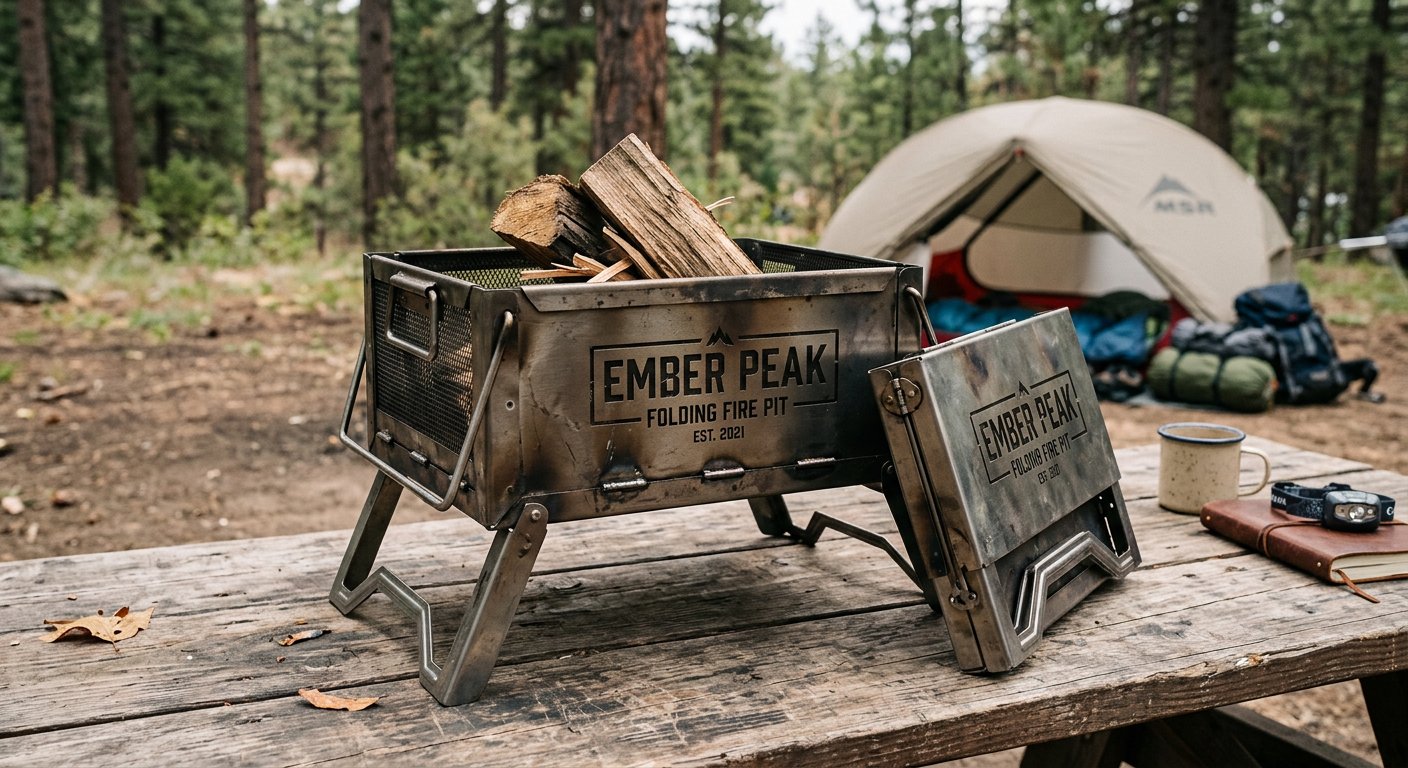
Fire pits punish bad fuel harder than fireplaces do: open breeze cools the flame, so damp wood that merely smoulders indoors will smoke out the whole patio outdoors. The best fire pit wood is dry, dense and cut short — here’s the full picture.
Rule 1: Below 20%, Always
Moisture is the smoke-maker (the physics: the smoke guide), and outdoors there’s no flue to hide it. Our meter-tested standard applies to everything, but especially the wood you burn where the neighbours can see it.
Rule 2: Right-Sized Pieces
Pit bowls aren’t fireboxes — oversized logs dome above the rim (a spark hazard) and smother their own airflow. Our fire pit wood is cut specifically for pit loads, and double split bags suit smaller bowls perfectly. Big pits like the 120cm cast iron happily take full splits by the bag.
Rule 3: Dense Species For Long Evenings
Dense hardwood — ironbark above all — burns longer and coals better, which is the difference between an evening and a wood-stocking chore. Lighter woods mean constant feeding. Build technique (teepee, then feed): the fire pit fire guide.
Alternatives Worth Knowing
- Fire pit charcoal — the lowest-smoke option, ideal for small spaces and decks
- A low-smoke pit — reburns smoke whatever the fuel
- Never: treated/painted timber, particleboard, driftwood (salt = toxic smoke)
Pick the pit: the choosing guide. Stock the fuel: the firewood shop. Quick answers: the FAQs.