
The campfire is the point of camping — and the fuel decisions around it matter more outdoors than anywhere. Bring the wrong wood and you’ll smoke out the campsite; transport the wrong wood and you can spread tree pests across regions. Here’s the camper’s complete guide.
Rule One: Buy Local, Burn Local
Transporting firewood more than ~80km (50 miles) is how invasive pests and diseases travel to forests that have no defences against them — the reason rangers say “buy it where you burn it”. Source wood near the campground: local vendors, the camp store, or approved sellers listed by the park.
Rule Two: When You Pack Your Own, Pack Certified
The clean exceptions to buy-local are heat-treated/certified wood and manufactured fuels, which travel safely. Our courier-shippable options are built for this: kiln-crisp kindling bags, 20kg seasoned log bags, fire wool sachets (windproof, one-match) and lump charcoal for camp cooking.
Rule Three: Gathering? Know the Rules First
Many campgrounds allow collecting downed, dead wood onsite; many prohibit it entirely. Check before you gather, take only what’s down and dead, and never strip standing dead trees — they’re habitat. And accept that gathered wood is rarely dry: pair it with brought-along starters.
The Camp Kit That Never Fails
- Fire starter: fire wool sachets or natural firelighters — light in wind, no chemicals near food
- Tinder-to-log bridge: a small kindling bag or double split bag — small pieces catch while gathered wood dries
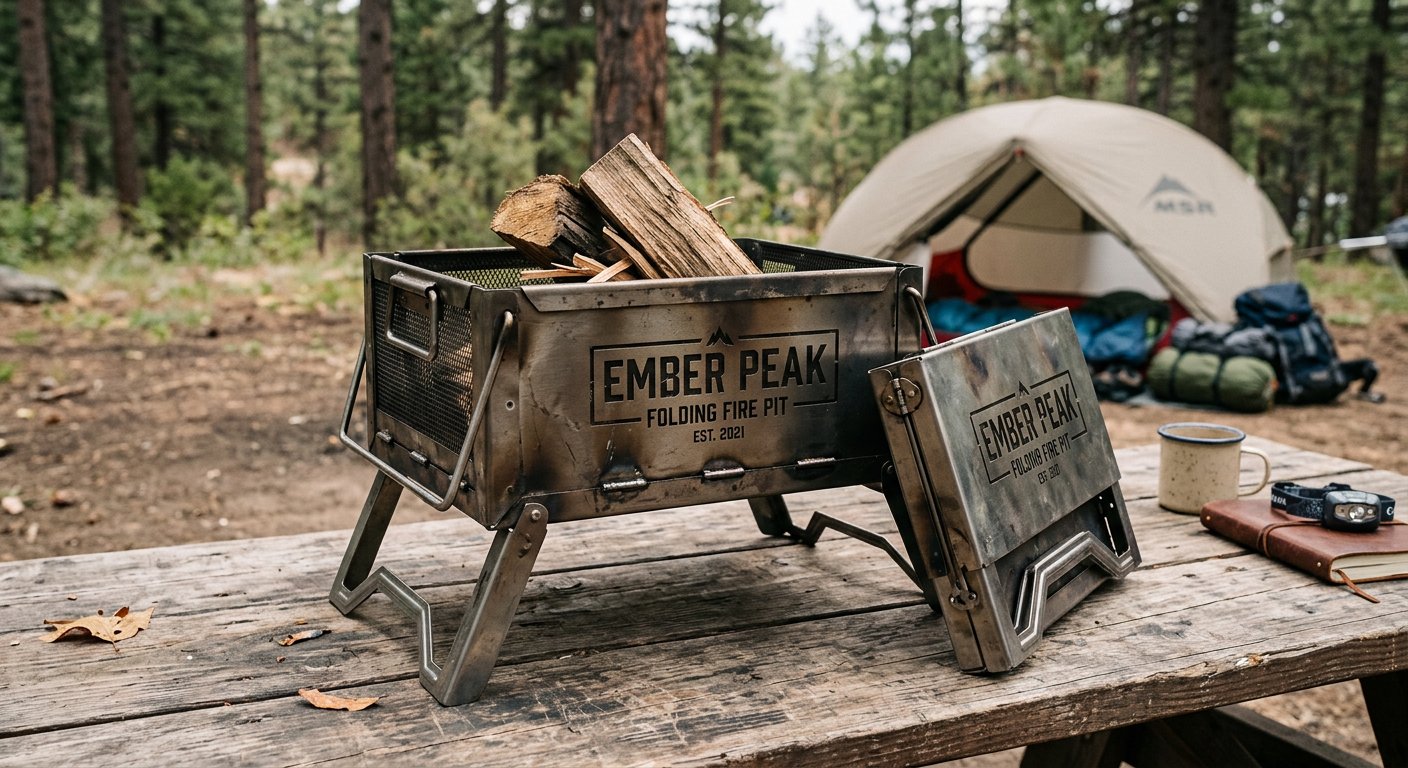
- The pit itself: a folding fire pit or portable camper where ground fires aren’t allowed or kind
- Cooking upgrade: the Wanderer adds a grill over the coals
Campfire Technique, Briefly
Same physics as home, more patience: teepee over firelighter, feed gradually, keep it bowl-sized. Full method (and the smoke diagnosis): fire pit fire guide and why fires smoke. Extinguish dead-cold before sleeping or leaving — drown, stir, drown. The full outdoor checklist: fire safety. More outdoor living in our guides.